


What is the difference between activated and deactivated users?
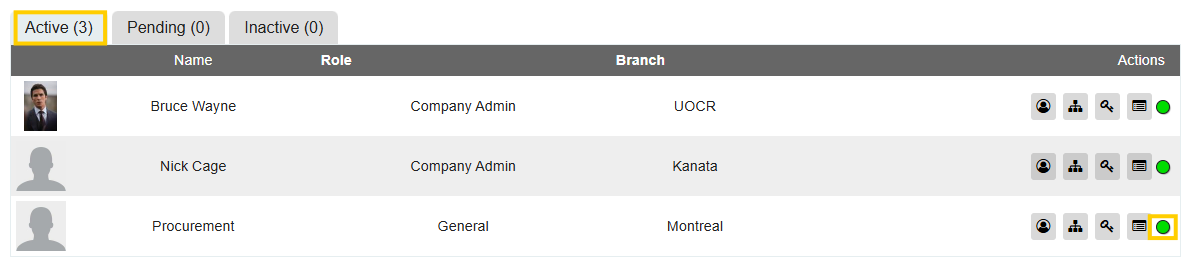
In Tradogram, the status of a user determines their ability to interact with the system and perform procurement tasks. You can easily distinguish between these statuses by looking at the color-coded indicators in your user list.
Activated Users
- Access: These users have full permission to log in and access their Tradogram account.
- Visual Indicator: Activated users are identified by a green button located beside their name.
Deactivated Users
- Access: Deactivated users are restricted from logging into their accounts.
- Functionality: They are unable to run any transactions or perform actions within the platform.
- Data Retention: While they cannot access the system, all of their historical data remains securely linked to the company for auditing and record-keeping purposes.
- Visual Indicator: Deactivated users are identified by a red button located beside their name.

Managing User Lists
To make management easier, Tradogram provides organized views within the Company Profile:
- There are separate tabs specifically designed to show Active and Inactive users.
- This separation allows administrators to quickly audit who has current access without sifting through former employees or temporary staff.
Important Note for Multi-Company Structures
If your organization uses a multi-company setup in Tradogram, user management requires extra caution:
- Global Deactivation: Deactivating a user in any company will automatically cause them to be deactivated across all companies they have access to.
- Selective Access Removal: If you need to revoke a user’s access from one specific company while allowing them to remain active in another, do not use the standard deactivation button. Instead, reach out to your Customer Success Manager or contact support@tradogram.com for assistance with selective removal.
Thank you! Your submission has been received!
Oops! Something went wrong while submitting the form.
.webp)
.png)


