

In today's fast-paced business environment, organizations continually seek innovative ways to optimize processes and maximize cost savings. One of the most effective strategies is to incorporate an e-procurement solution into your organization. This guide will overview everything you need to know about e-procurement solutions and how they can help maximize savings.
The Importance of Cost Savings in Procurement
Cost savings play a crucial role in procurement, directly impacting a company's long-term sustainability and profitability. One of the primary goals of procurement departments is to increase cost savings while minimizing expenses. Effective procurement strategies allow businesses to acquire goods and services at the best possible prices without compromising quality.
These saved resources can then be strategically invested in areas like new product development or expanding market reach.
Understanding E-Procurement
Before delving into cost-saving strategies, let’s first define e-procurement. E-procurement, or electronic procurement, is a strategic approach that digitizes and automates various procurement tasks for maximum efficiency. According to PWC, by 2027, over 70% of procurement processes will be automated.
5 Benefits of E-Procurement Solutions
If you incorporate digital procurement solutions into your processes, your organization will gain multiple benefits. The benefits range from cost reduction to improved collaboration with the suppliers. So, let’s take a look at each of these in more detail.
1. Reduced Costs
E-procurement tools enable organizations to automate routine and administrative tasks, allowing employees to focus on strategic initiatives. This automation leads to increased operational efficiency and significant cost savings.
2. Supplier Collaboration
Digital procurement systems improve communication and collaboration with suppliers. By fostering better relationships, organizations can reduce risks associated with fraud and miscommunication while negotiating better deals, further contributing to cost savings.
Example: Company X uses e-procurement tools to optimize supplier collaboration, while Company Y does not. Company Y frequently faces issues like miscommunication and late deliveries, resulting in additional costs. In contrast, Company X maintains strong supplier relationships through efficient communication and automated processes.
3. Improved Spend Visibility
E-procurement tools provide real-time visibility into business spending, allowing organizations to identify spending patterns and trends. Improved visibility enables quicker identification of cost-saving opportunities and helps mitigate issues like maverick spending or fraud.
4. Compliance
E-procurement tools ensure that procurement processes align with company policies and industry regulations. Enhanced visibility and compliance minimize risks associated with violations and costly errors.
5. Enhanced Decision-Making
E-procurement software comes equipped with analytics tools that empower procurement teams to access real-time data and reports. This data-driven approach is vital for informed decision-making, enabling teams to optimize supply chains and identify areas for improvement.

Strategies for Cost Savings with e-Procurement Solutions
Well, as far as we are clear on what e-procurement tools are and the main benefits of integrating digital procurement solutions into your organization, let’s dive into the practical section of today’s guide.
1. Assess Your Current Procurement Processes
Before moving on to any other step, strategy, or tip, it is important to take a step back and carefully assess the current procurement processes. To start with the assessment, first of all, review how your organization sources goods and services necessary for smooth business operations. The critical areas to track include speed, cost-effectiveness, and accuracy.
Afterward, assess your procurement's internal and external communication aspects, including communication between departments and vendors. Assessing communication efficiency is vital for identifying setbacks that result in unnecessary or unexpected expenses.
Finally, evaluate your supplier relationships. Are your suppliers reliable enough? Do they deliver goods and services on time? Assess different areas when it comes to vendor relationship management, identifying aspects that need improvement.
2. Eliminate Maverick Spend
Maverick spending refers to unauthorized purchasing that bypasses the procurement team. Such purchases undermine cost-saving agreements and disrupt budget control. Conduct a comprehensive spend analysis to identify areas of maverick spending and address underlying reasons.
3. Strategically Manage Your Suppliers
Fostering strong relationships with suppliers is key to maximizing cost savings. Here are some tips for effective supplier management:
- Segment Suppliers: Classify suppliers based on performance, costs, and other criteria.
- Build Relationships: Use e-procurement tools to enhance communication and collaboration.
- Negotiate Long-Term Contracts: Work with top-performing suppliers to secure favorable pricing and terms.
- Diversify Your Supplier Base: Reduce risks associated with shortages and enhance procurement flexibility.
- Conduct Regular Supplier Audits: Ensure compliance with contract terms and legal regulations.
4. Streamline Procurement Processes
One of the key strategies you need to incorporate in order to increase cost savings in procurement is to streamline your current procurement processes. Streamlining is possible by implementing automated procurement workflows to reduce manual errors and delays and eventually create a more reliable procurement process.
Streamlining procurement processes will allow for the reduction of manual errors, directly decreasing risk factors associated with costs as a result of errors. Automation also allows for efficiency gains as it speeds up the process, leading to faster and more efficient procurement.
Also, by efficiently streamlining procurement, your organization can standardize a variety of processes, especially regarding supplier management. Such standardization will lead to higher efficiency, allowing you to negotiate better deals in the future.
5. Choose the Right E-Procurement Software
Selecting the appropriate e-procurement software is crucial for maximizing cost efficiency. Consider the following when choosing a solution:
- Identify Business Needs: Ensure the software aligns with your procurement challenges and goals.
- User-Friendly Interface: Choose software that simplifies processes rather than complicating them.
- Integration Capabilities: Ensure compatibility with accounting and ERP systems like QuickBooks and NetSuite.
- Scalability: Opt for cloud-based procurement solutions that can grow with your organization.
- Comprehensive Features: Look for tools that automate workflows, manage contracts and suppliers, and enhance risk management.
Maximize Cost Savings with Tradogram
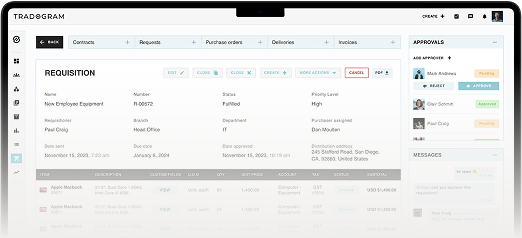
If you are looking for the perfect solution for maximizing cost savings within your organization, then you are in the right place. Tradogram is an all-in-one procurement software that comes in handy with all the necessary features to streamline procurement within your organization, maximizing ROI.
The platform’s features range from potent spend and inventory management to contract and supplier management tools. Moreover, Tradogram offers dedicated tools to automate purchasing and create customizable workflows.
To learn more about how Tradogram can help your business maximize cost savings and increase ROI rates, contact us. Our team will be more than happy to assist you.