
Published
September 4, 2025
| Updated
August 24, 2026

The power of automated spend analytics in procurement

The Power of Automated Spend Analytics in Procurement

Spend analytics used to require an analyst and a week of spreadsheet work. This article looks at what changes when the analysis runs automatically, who can use the results, and the purchasing decisions that improve when spend data is available on demand.

Majdi Sleimen, COO of Tradogram
The Power of Automated Spend Analytics in Procurement
Take control of your procurement
Book A Demo

The intersection of technology and finance is becoming increasingly packed with people, and they're not all accountants, data analysts, and IT-savvy Wall Street brokers. With the advent of virtual wallets, central banks breaking into blockchain technology, paper-free deposit systems at major financial institutions, and social media-based banking, corporate spend analysis is almost at risk of being neglected.

This lack of innovation and insight in the corporate world is severely hindering business process improvements across a range of industries. To help combat the fact that only a small percentage of organizations use automated spend analytic systems, certain procurement management applications now offer users the ability to design customized reports, access real-time information on spending activity, and connect invoices to an Accounts Payable feature for accurate spend visibility. All that's missing is a subdermal microchip implant for your CPO to monitor company spending during the two hours she's snorkeling off the coast of the Cayman Islands.

So with all the available technology in 2017, why are there still lingering obstacles to optimal spend visibility? There's a few reasons, take note:

  • Data must be collected from multiple information systems and sources such as Accounts Payable (AP), General Ledger (GL), etc. This can result in a complicated and a lengthy process when attempting to retrieve information.
  • Spend data may be inaccurate and/or incomplete due to a lack of organization and access to information.
  • Orders are made without a proper system for approval, which contributes to maverick spending (purchases that "break the rules" of corporate spending procedures).
  • A company may not want to challenge the status quo and move away from basic spreadsheet applications and manual reviews to aggregate and analyze spending data.

The advantages of implementing tactics for spend analysis can be witnessed immediately: savings (the most obvious), heightened process efficiency, greater control over maverick spending, and the ability to benchmark your corporate position relative to the competition. The list goes on: employees are able to be more productive, it becomes easier to identify the highest value suppliers per spend category, and monitoring item prices & budgeting is made effortless. All of these points make a strong argument for increased data analysis in procurement. Next time you find yourself crossing the road between technology and spending data, let yourself get hit (by insight).

Frequently Asked Questions

What is automated spend analytics?
Automated spend analytics produces analysis of what an organization buys, from whom and at what price without someone assembling it manually each time. Rather than exporting transactions and building a spreadsheet, the system maintains current spend data and generates customizable reports on demand. Capabilities typically include real-time information on spending activity and connection between invoices and accounts payable so the picture reflects both committed and paid spend. The difference from manual analysis is availability rather than sophistication.
What changes when spend analysis runs automatically?

Frequency changes first, and that changes everything else. Manual analysis is expensive enough that it happens quarterly or annually, which means findings arrive after the period they describe. Automated analysis is available whenever someone has a question, so it informs decisions rather than reviewing them. The second change is who can ask: analysis requiring an analyst and a week of work gets requested rarely and only by people senior enough to justify it, while on-demand reporting gets used by the people making purchasing decisions.

Who benefits from on-demand spend data?

Budget owners benefit most directly, since they can see committed and actual spend at the moment they approve rather than at month end. Procurement benefits through faster identification of consolidation and renegotiation opportunities. Finance benefits through forecasting built on current commitments. Department managers benefit from being able to answer questions about their own spending without requesting a report. The broadening of access is the underrated part, because insight held by one analyst changes fewer decisions than insight available to everyone.

What stops organizations from adopting automated spend analytics?

The most common obstacle is data rather than software: supplier names recorded inconsistently, categories coded differently across departments, and transactions spread across systems that do not reconcile. Automating analysis on that foundation produces confident output from unreliable inputs, which is worse than no analysis. The second obstacle is the assumption that this capability belongs to large enterprises, which was true when it required dedicated analysts and is no longer true now that it is bundled into purchasing systems.

Written by:

Majdi Sleimen, COO of Tradogram
Co-Founder & COO, Tradogram

Majdi Sleimen is the Co-Founder of Tradogram and a procurement expert with deep experience in source-to-pay processes and procurement optimization. He focuses on helping organizations streamline purchasing workflows, improve control over spend, and adopt more efficient procurement systems through technology-driven solutions.

Take control of your procurement with Tradogram

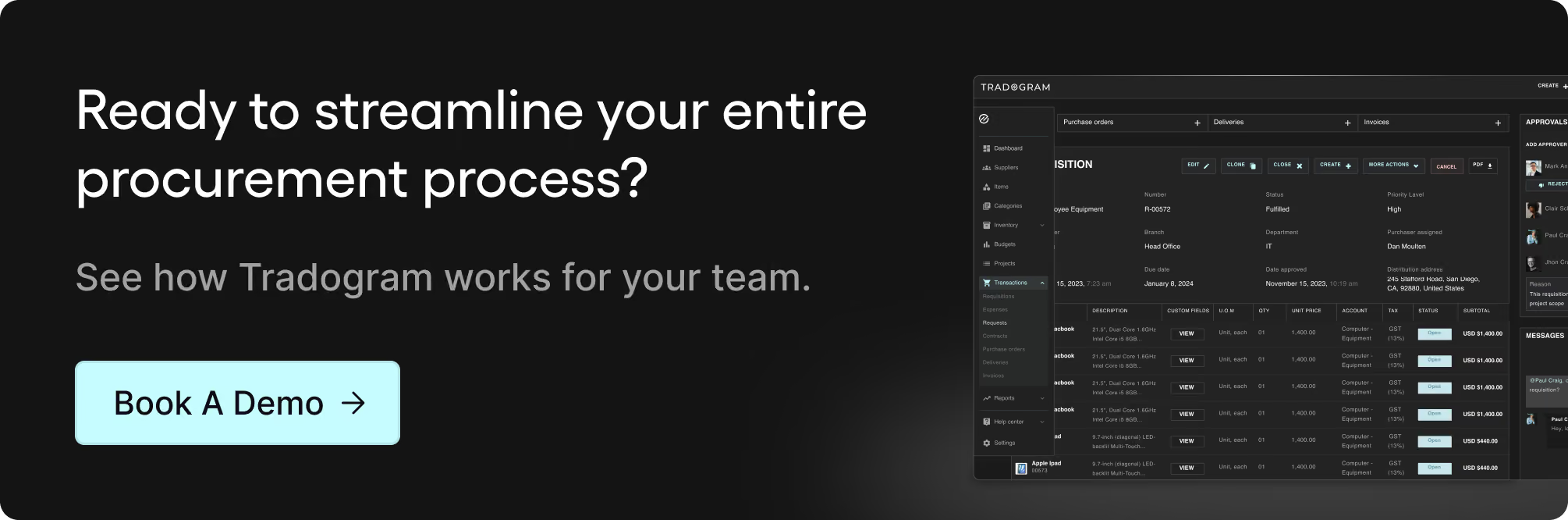
Tradogram requisition dashboard showing an approval workflow Book A Demo