

With five suppliers and one approver, email and a spreadsheet are cheaper than any eProcurement platform. That is not a concession to make before a sales pitch. It is arithmetic, and a vendor who tells you otherwise is selling you something you don’t need.
The arithmetic changes at a specific point: when more than one person can commit money, when departments start buying independently, and when nobody can answer what has been ordered but not yet invoiced. At that point, the manual process stops being cheap and starts being invisible, and the cost moves from your time to your bottom line.
Most buyers arrive at this category somewhere past that line, already certain the current process has stopped working, and trying to work out which parts to replace first.
That is harder than it sounds, because eProcurement covers a wide range. Some procurement systems handle sourcing and stop. Others run the transactional cycle from request to invoice and leave sourcing alone. A few do both, and a few claim to.
This guide covers what eProcurement is, how it evolved, the stages it covers, the benefits that hold up in practice, where it disappoints, and what to check before you shortlist anything.
Key Takeaways
- eProcurement is the digital management of the full purchasing cycle, not a single tool. It spans supplier discovery, sourcing, ordering, receiving, and invoicing, and platforms differ substantially in which parts they cover.
- Transactional gains are the most reliable, and sourcing gains are the largest. Faster approvals and less data entry show up within months. Better pricing from consolidated spend and structured supplier comparison takes longer and is worth more.
- Integration with your ERP or accounting system determines the outcome more than the feature list does. If approved orders and invoices do not flow into finance automatically, eProcurement has moved the manual work, not removed it.
- Adoption is the failure point, not capability. PwC's Global Digital Procurement Survey found that 94% of companies already use a source-to-pay platform. In comparison, only 37% of transactional procurement processes are digitized, and it names user take-up as one of the limiting factors. Owning the software is not the same as running the process through it.
What is eProcurement?
eProcurement, sometimes written e-procurement or electronic procurement, is the business-to-business purchase and sale of goods and services through integrated digital platforms instead of paper, email, and phone.
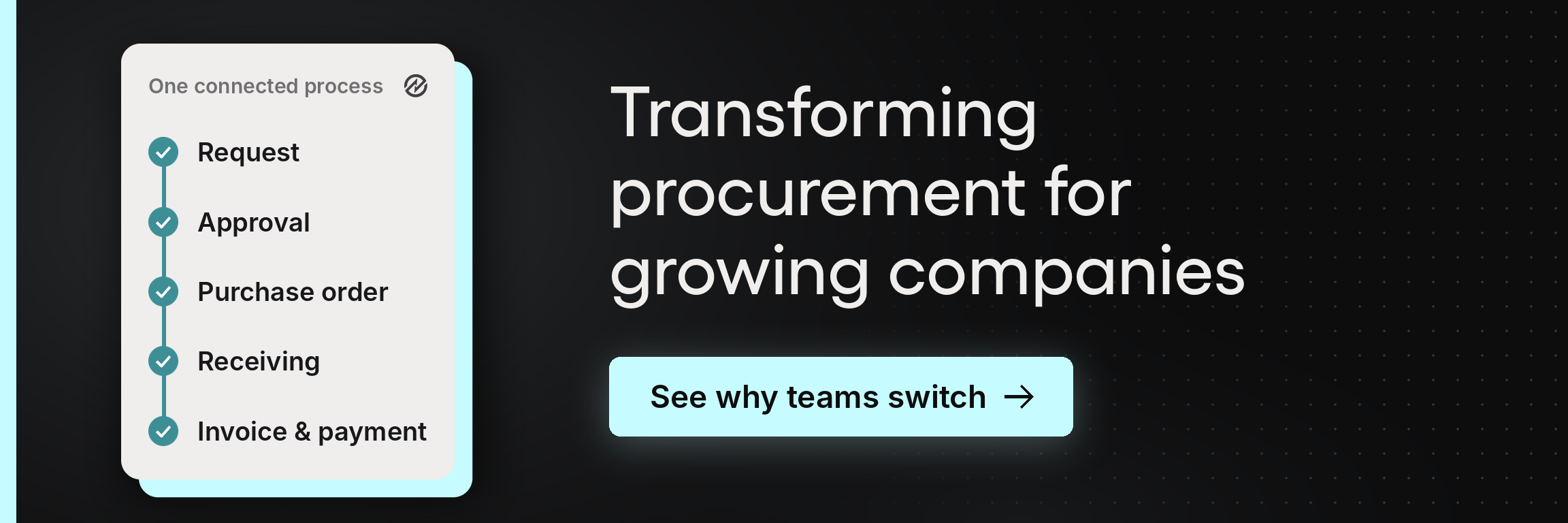
In practice, an eProcurement system manages the entire process on a centralized platform: finding and evaluating suppliers, running sourcing events, raising and approving purchase requisitions, issuing purchase orders, recording what arrives, handling invoicing and order logistics, and reporting on it all.
It is the digital procurement layer that sits across purchasing processes that were previously paper-based and held together by email. The defining characteristic is not that each step happens on a screen. It is that the steps are connected, so information moves through the process without being retyped, and the procurement data that comes out the other end is reliable enough to act on.
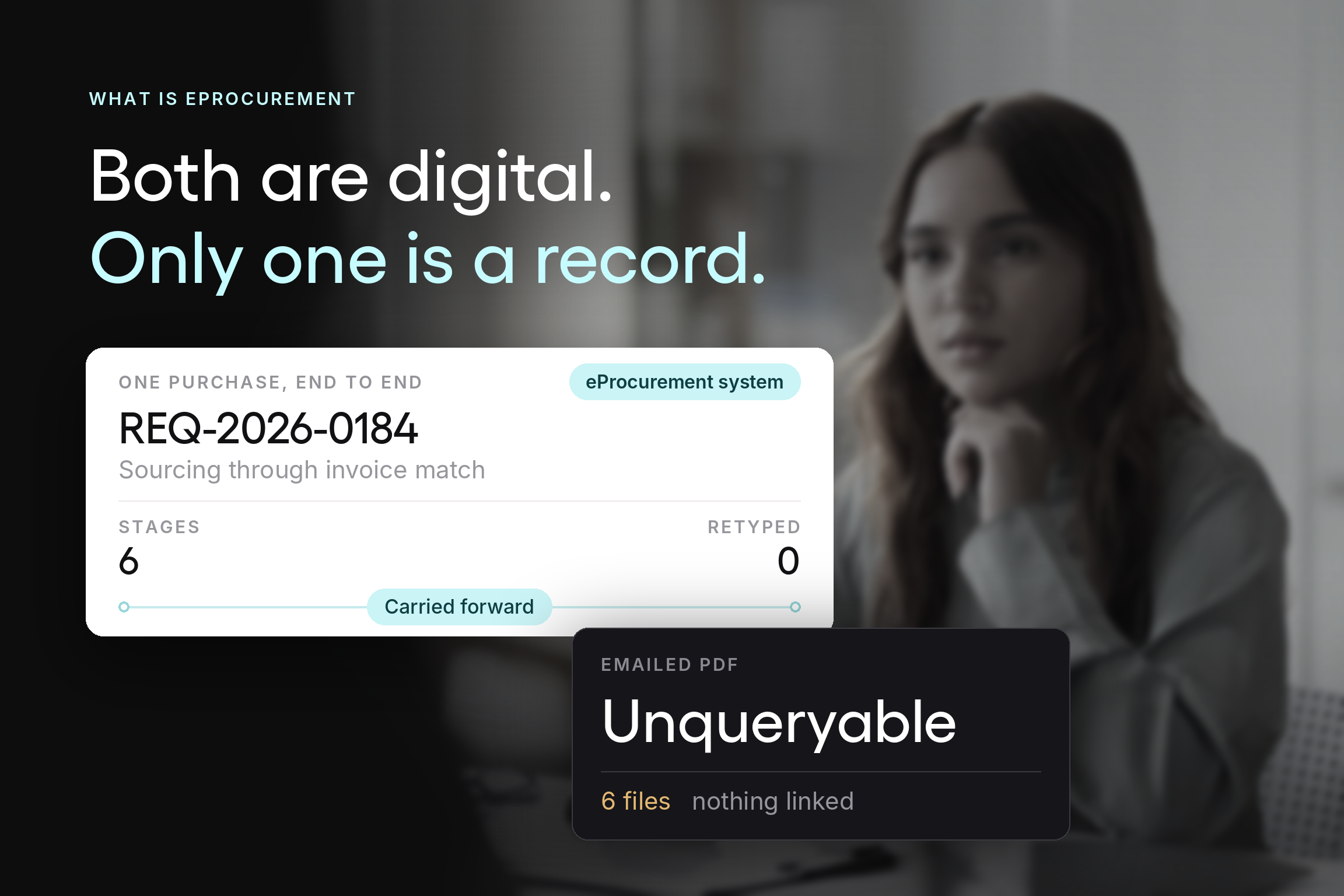
That is the difference between eProcurement and emailing a PDF. Both are digital. Only one produces a record you can query.
Where eProcurement came from
The category is older than most buyers assume. eProcurement began in the 1980s with electronic data interchange, a standardized format that let large trading partners exchange purchase orders and invoices between computer systems without paper.
Electronic data interchange was the first serious attempt to store purchasing records electronically. EDI worked, and it still does, but it was expensive to implement and practical mainly for large organizations with high transaction volumes and the technical resources to support it.
Web-based platforms in the late 1990s and 2000s made the same idea accessible to organizations without an EDI budget. The modern version is cloud software accessible from any browser or electronic device in a warehouse, connecting to accounting and enterprise resource planning systems through APIs. That is why a 200-person business can now run purchasing controls that used to require an enterprise implementation.
The electronic data interchange system has not disappeared. Many eProcurement tools still support EDI alongside newer methods because many large suppliers transact that way and will continue to do so.
eProcurement versus traditional procurement
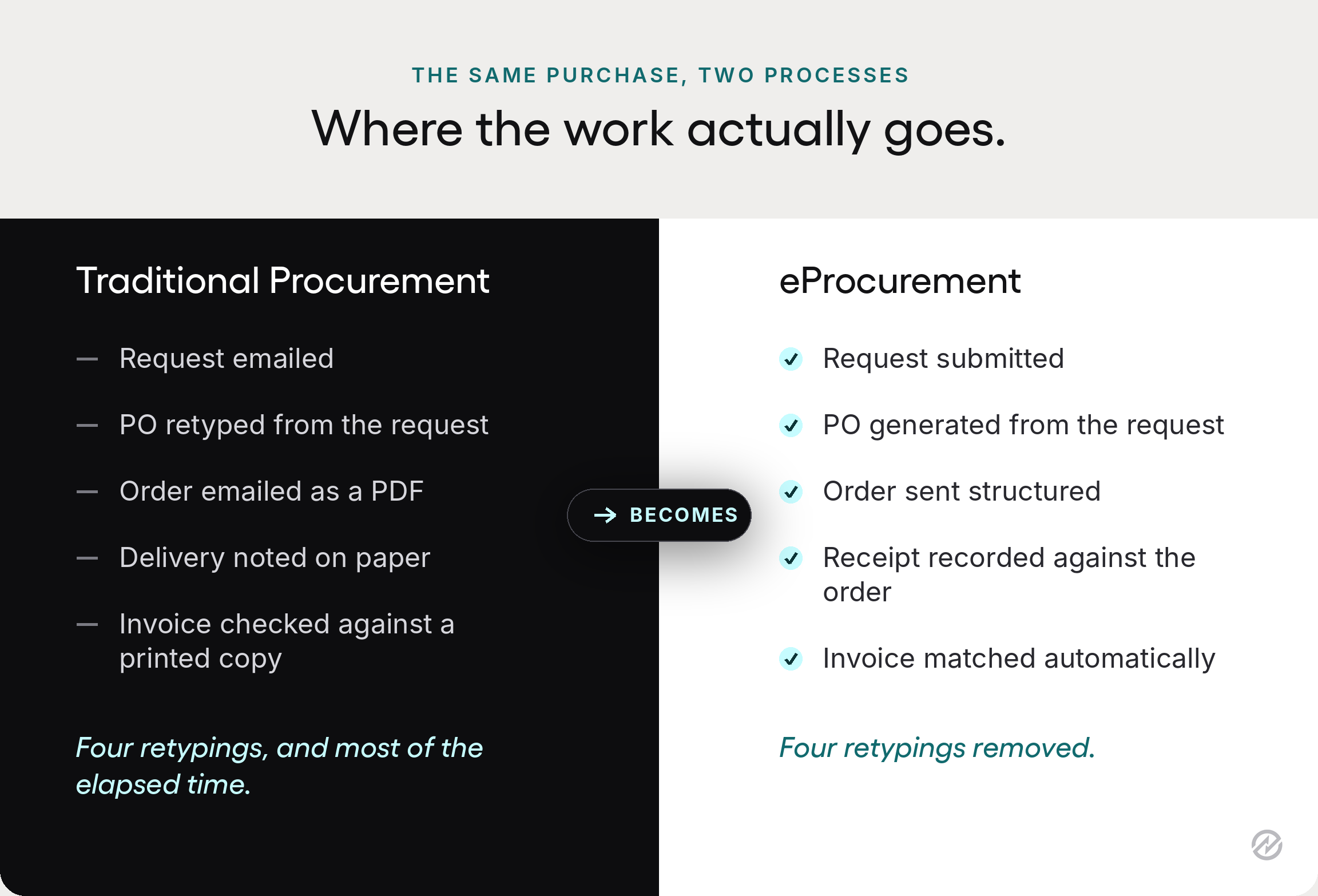
Traditional procurement runs on manual processes and documents that get copied. A requisition is emailed, a purchase order is typed from it, an invoice is checked against a printed copy, and the record of what happened is distributed across inboxes and folders.
eProcurement runs on a shared record and electronic data storage. The approved request becomes the purchase order. The purchase order becomes the reference for receiving. The receiving record becomes half of the invoice check. Nobody retypes anything, and the audit trail exists because the process ran, not because someone assembled it afterward.
The practical consequences deserve to be specific. Traditional procurement makes it hard to answer what has been committed but not yet invoiced. It makes purchasing policy depend on whether people remember it, and manual approvals depend on whether someone is at their desk. It makes spend analysis a quarterly project, because purchasing data lives in documents. eProcurement changes all three, and those three account for most of the value.
How eProcurement works: the stages
The eProcurement process is usually described in stages, and understanding them is the fastest way to work out which platform covers what you need.
e-Informing. Gathering and distributing purchasing information across the organization and to suppliers. The unglamorous foundation, and the one that determines whether the other procurement applications have anything reliable to work with.
e-Sourcing. Identifying and evaluating potential suppliers through digital procurement tools. Supplier discovery, qualification, and shortlisting happen here, and this is where a structured process improves most over a phone call to whoever someone used last time.
e-Tendering. Issuing requests for information, quotation, or proposal, then collecting responses in a comparable format. The value is side-by-side comparison against consistent criteria. The alternative is reading five differently structured documents and hoping you have understood them the same way.
e-Auctioning. Real-time competitive bidding among qualified suppliers. Useful for standardized, high-volume categories and actively counterproductive for anything where quality or service differentiates.
e-Ordering. Converting approved purchase requisitions into purchase orders automatically and transmitting them to suppliers. This is the transactional core of procure-to-pay and where most organizations start.
e-Invoicing. Receiving supplier invoices electronically and 3-way matching them against purchase orders and receiving records. This is where invoice processing cost and cycle time move.
e-Contract management. Storing supplier contracts in contract management, managing supplier communication, surfacing renewal dates, managing supplier risk, and checking that invoiced pricing matches contract terms.
e-Catalog management. Maintaining centralized, pre-approved product lists with agreed pricing, so routine purchases require neither sourcing nor a pricing conversation.
Most organizations do not implement all of these, and they should not implement them at the same time. e-Ordering and e-Invoicing deliver the fastest return for most mid-market buyers, with e-Sourcing, supplier risk management, and e-Tendering following once the transactional layer produces clean data.
The 20 benefits of eProcurement
The twenty benefits below are grouped into six themes instead of counted down, because the strongest ones are not the ones that happen to land at number one. Within each theme, the individual benefits are the ones that hold up when you check them.
Less administrative work
The most immediate and most measurable change.
1. Requisitions and approvals route themselves. Requests move by value, department, or category without anyone deciding the path, and approvers get notified. Shorter procurement cycle times follow directly, because the waiting was mostly the routing, and that one change improves operational efficiency across every downstream step.
2. Data carries forward instead of being retyped. Purchase orders are generated from approved requisitions, and invoice details are captured automatically. Data that carries forward cannot be mistyped at the handoff, which removes a category of costly mistakes.
3. Three-way matching clears the routine invoices. Invoices that agree with the purchase order and the receiving record clear without a person reading them line by line, so the team handles exceptions. Recording what arrived against the order is what makes three-way matching work, and that is why receiving discipline pays back twice.
4. Reports generate in seconds. Spend by supplier, by category, by department, over any period. Procurement reporting that used to mean opening files becomes a query, and requisitions, orders, invoices, and delivery notes stay findable in one searchable place.
The size of the gain depends on where you start. APQC benchmarking puts the cost of processing a single purchase order anywhere from roughly $14 to more than $54, and most of that spread comes from how the work is structured. On the invoice side, Ardent Partners puts the average cost at $9.84, taking 8.2 days, with 57% of suppliers now able to invoice electronically. The remaining 43% is where the manual handling concentrates, and it is the part an eProcurement system has to absorb.
Those are the two numbers worth measuring yourself against, because they are the ones eProcurement moves first.
Better control over spending
5. Maverick spending stops being invisible. Centralized approval workflows make purchases outside the process the exception, and exceptions are visible while they happen.
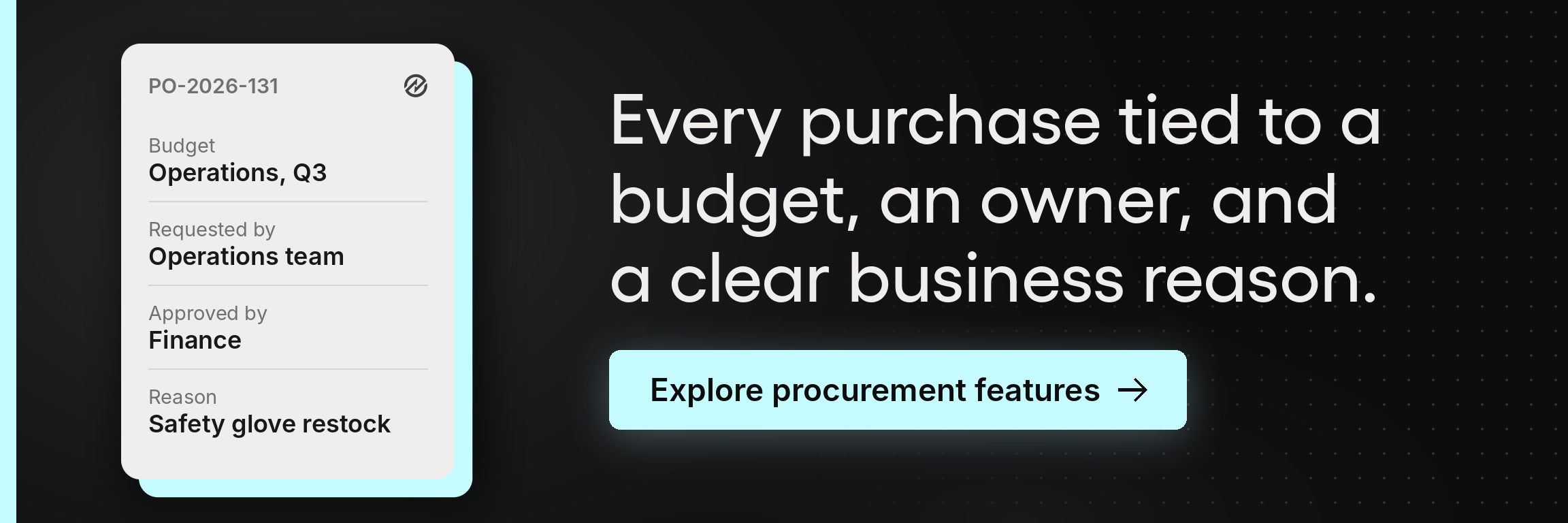
6. Budgets are checked before commitment, and committed spend is visible before the invoice. Budget checks at the request stage are the difference between preventing an overrun and reporting one, and the system enforces approval thresholds, preferred suppliers, and purchasing rules. Money promised but not yet billed is the figure spreadsheets cannot produce, and the one that explains most month-end surprises, and it is what makes cash flow forecasting something other than guesswork.
7. Small purchases get captured instead of reimbursed. Not every minor expense justifies a full requisition, and the usual result is an expense claim weeks later with a receipt nobody can code. Capturing low-value purchases against a general ledger account at the point of spend removes the reimbursement cycle and closes the gap where small, uncontrolled costs accumulate unseen.
Lower cost, on the platform and on what you buy
8. Consolidated volume improves pricing. Seeing that three departments buy the same item from three suppliers is the precondition for negotiating competitive pricing once instead of three times, and for reaching quantity discounts that individual departments could never justify alone. The cost savings here usually exceed the administrative ones.
9. Structured comparison and contract leverage recover value. Multi-supplier requests for quotation collected in a comparable format, through sourcing management software, produce better decisions than sequential phone calls. Knowing what you agreed and checking invoices against it recovers value that otherwise leaks quietly, and transaction history turns a renewal conversation from an assertion into a review.
10. Subscription pricing undercuts an ERP procurement module. Standalone eProcurement platforms are generally bought on a subscription with no major implementation program attached, which puts them well below the cost of licensing and configuring the equivalent module inside an ERP. Many organizations also find a specialist platform offers deeper procurement functionality than the embedded alternative at the lower price, an unusual combination and one worth verifying.
Faster to adopt and easier to live with
11. Implementation runs in weeks, not quarters. ERP procurement modules typically need months of configuration and outside consultants. A specialist platform deploys against workflows that are already built in, so the internal time commitment is measured in days of configuration. Ask any vendor what the first 30 days look like and who does the work.
12. Your data stays portable, so you are not locked in. Transaction records export to spreadsheet format and import into another system, which makes switching providers a real option. Some organizations run more than one platform across different business units for the same reason. Check portability at evaluation, while you still have leverage.
13. It gives you a structured way to retire an outdated process. Replacing a purchasing process is easier when the replacement has a shape. Adoption works best when the rollout is paired with a decision about what the process should be. Configuring the platform around whatever people were already doing wastes the occasion, and the software becomes the occasion for the change, not the change itself.
14. The process travels with the people using it. Approvals happen from a job site, a meeting, or a phone, which matters most for the approvers who are least often at a desk and most often the bottleneck. The same applies to the dates nobody wants to miss: delivery schedules, contract expirations, and supplier evaluations synchronize across everyone who needs them instead of living in one person's calendar.
Stronger supplier relationships
15. Suppliers receive documents they can process. Structured electronic purchase orders and RFQ templates are easier for suppliers to handle than a scanned PDF, which improves response rates and reduces back-and-forth on both sides. Shared visibility into order status removes most of the status chasing as well.
16. Supplier performance becomes measurable. On-time delivery, fill rate, and quality exceptions are calculable once orders and receipts are recorded against each other. A single supplier management record holds contacts, documents, certifications, pricing history, and performance notes in one place.
17. Payment becomes predictable, and suppliers notice. Invoices that clear on schedule change how a supplier treats you when allocation gets tight, which is the point at which the relationship matters.
Compliance, records, and scale
18. The audit trail exists by default. Every approval, change, and action is recorded because the process ran. Nobody documented it afterward. When an auditor asks what happened, the answer is a report, not an investigation.
19. Policy and best practice are enforced structurally. Requisitions before purchase orders, ordering from contracts, routing approvals to authorized people, verifying invoices through three-way matching, and evaluating supplier performance all happen by rule. Approved supplier lists, verified banking details, and segregation of duties are structural controls, not procedural hopes, and that is a meaningful part of procurement risk management.
20. It scales across departments, entities, and currencies. Tax handling, payment terms, and user roles configured once apply consistently as the organization adds departments, locations, or legal entities. This benefit compounds rather than arriving all at once, which is why growing multi-entity businesses tend to feel the value more than single-site ones.
eProcurement and your existing systems
This part of the evaluation determines whether the software saves time or adds a step, and it gets less attention than it deserves.
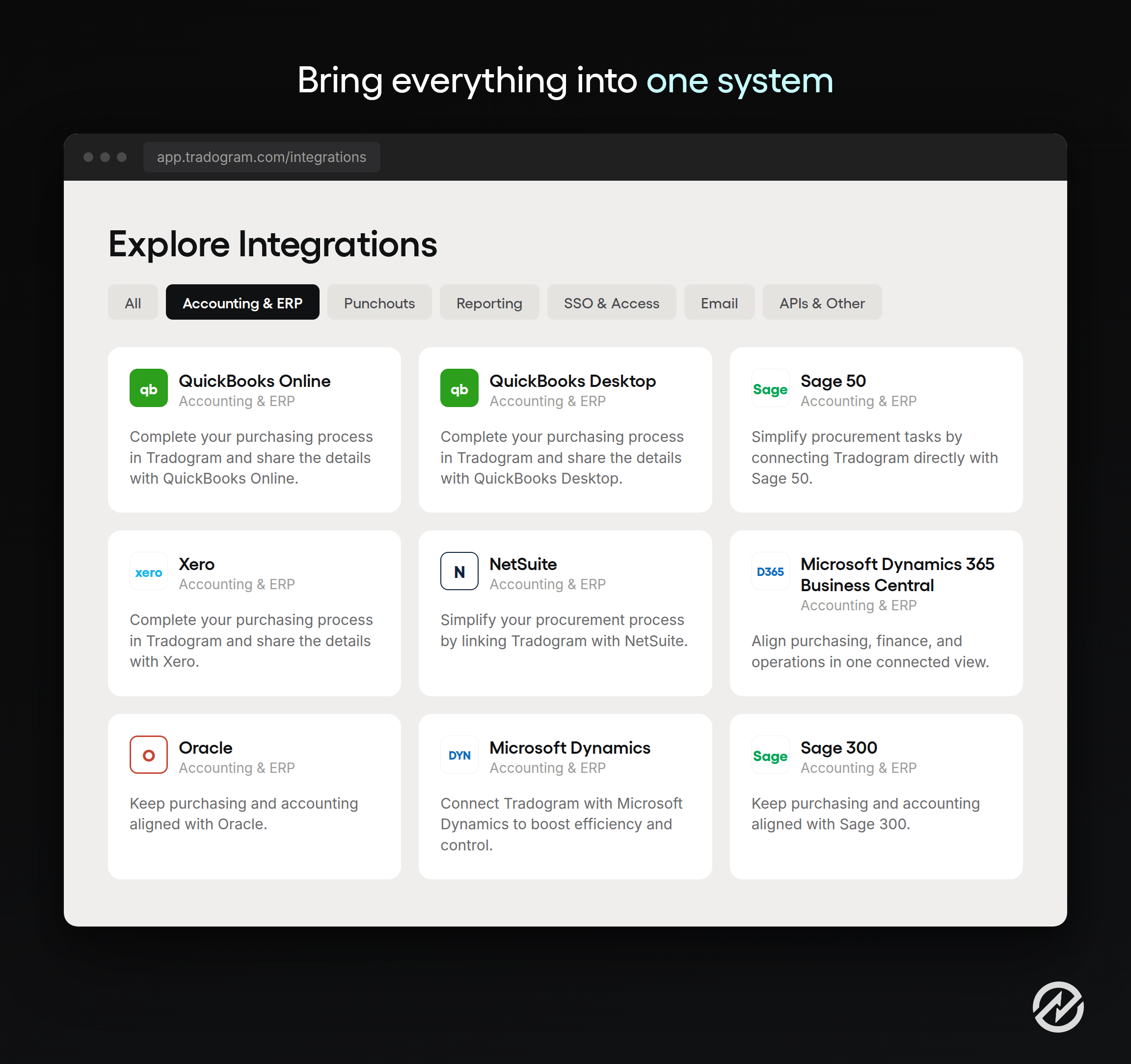
An eProcurement platform sits in front of your accounting or ERP system instead of replacing it. Purchasing, approvals, and receiving happen in the procurement system, and the approved, matched result flows into finance as a payable. That division of labor makes eProcurement achievable for organizations without dedicated systems administrators, and it lets internal finance processes stay where they already work.
ERP systems do include purchasing modules, and most enterprise resource planning suites will sell you one. Those modules are generally built for large organizations with the technical resources to configure them, and the effort scales accordingly. A connected eProcurement layer gives you the purchasing controls without rebuilding the accounting stack, and standalone platforms often offer more specialized procurement functionality than an ERP-embedded module at a lower total cost.
The five questions worth asking any vendor are narrow and answerable:
- Does supplier data sync in both directions, or only one?
- Do approved purchase orders push across, or only invoices?
- How are the chart of accounts and cost centers mapped?
- What happens when someone edits a record on the accounting side?
- Which of these are standard, and which are custom integration work?
Vendors who answer those precisely are the ones whose procurement integrations hold up in production. Vendors who answer with the word seamless are worth pressing.
The disadvantages of eProcurement
Every category has them, and a guide that omits them is not much help when making a decision.
Technology dependency. When the platform is unavailable, purchasing stops unless you have a defined fallback. Ask about uptime history and what the documented fallback process is, not whether outages happen.
Integration can be complex. If your finance system is heavily customized, or you run several entities on different systems, integration is a project, not a setting. This is the single most common source of implementation overrun.
Change management meets resistance. Procurement teams generally welcome the change. People who have informally approved purchases for years are being asked to accept more visibility and less discretion, and they are the ones who push back. That objection is rational and needs answering.
Data security requires attention. Moving purchasing and supplier data onto a cloud platform makes vendor security a legitimate diligence item. Ask about certifications, data residency, and access controls, and get the answers in writing.
Supplier onboarding creates work. Getting suppliers onto a portal or into a catalog takes effort, and it is rarely worth doing for every supplier. Reserve it for the high-volume ones.
Cost is not only the subscription. Implementation time, data cleanup, and the internal hours the project consumes are real and consistently underestimated.
None of these are reasons to avoid eProcurement. They are reasons to phase it, start where the return is clearest, and be honest in the business case about what the first six months look like.
Where eProcurement is heading
Two developments are worth tracking, and one of them is mostly noise so far.
Artificial intelligence in document capture and classification is real and already useful. Models that read a supplier's invoice without a per-supplier template remove the largest single block of manual data entry in accounts payable. Automatic spend classification does the same for the analyst who used to categorize transactions by hand. Both are narrow, both work, and both ship in mainstream platforms today. The Hackett Group found that 69% of organizations access AI through capabilities embedded in their existing procurement platforms, so for most buyers this is a question about the platform you choose and not a separate purchase.
AI-powered procurement decision-making is further out than the marketing suggests. Demand forecasting, supplier risk scoring, and price prediction all exist, and the good implementations help. But they depend on a volume and quality of purchasing data that most mid-market organizations do not yet have. The same Hackett study found that 43% of organizations are actively pursuing AI deployment and only 12% are at large-scale implementation, which is why you should fix the transactional layer first. It is not a reason to dismiss the capability.
Advanced analytics sit between the two. Once eProcurement has produced twelve months of clean purchasing data, analysis tools can support strategic decision-making about consolidation, supplier mix, and category strategy in ways spreadsheets cannot. That is where most of the remaining value sits after the administrative burden has been cleared, and it is worth building toward deliberately.
The sensible position on emerging procurement technology generally: adopt what removes manual work now, watch what promises to make decisions, and remember that every one of these capabilities amplifies the underlying process rather than replacing it.
Who needs eProcurement systems, and who does not
The category is broader than its enterprise reputation, and the fit question is about complexity rather than size.
Small businesses with a handful of suppliers and one approver do not need it. The manual process is typically cheaper and easier at that scale.
Growing mid-market organizations are where it pays back fastest. Once more than one person can commit money, departments buy independently, and nobody can answer what has been ordered but not invoiced, the manual process stops being cheaper.
Multi-entity and multi-location businesses get the largest structural gain, because consistency across units is exactly what spreadsheets cannot enforce.
Organizations with complex supply chain management requirements, working with multiple partners across a global procurement footprint, need the visibility more than most and usually have the volume to justify the sourcing modules as well.
Public sector and regulated organizations feel the compliance benefit first, since they have to produce an audit trail on demand.
Choosing eProcurement software
When working through a shortlist, these criteria separate platforms.
Coverage across the critical functions you need. Decide first whether your pain is transactional (approvals, orders, invoices) or strategic (sourcing, supplier comparison, contracts). Most procurement strategies start with the former, because transforming procurement practices without a reliable transactional record rarely holds. Many platforms do one well and the other adequately.
Configurable approval workflows. Routing by value alone is not enough. Look for department, project, supplier, category, and combinations, plus delegation when an approver is away.
Budget control at the request stage. Checks that run before approval, while the purchase can still be stopped.
Three-way matching. Automatic comparison of invoice against purchase order and receiving record, flagging only exceptions.
Integration you have seen demonstrated. With your accounting system and, ideally, your chart of accounts.
Reporting you can configure yourself. If a spend report by supplier requires a support ticket, it will not get run.
Usability for occasional requesters. Most people in an organization raise a handful of requests a year. A system they need training for will be worked around, and a worked-around system produces incomplete data, which removes the reason you bought it. This is the criterion PwC's finding points at, and it is the one most evaluations weigh least.
Implementation support that is specific. Ask what the first 30 days look like, who does the configuration, and what they need from you.
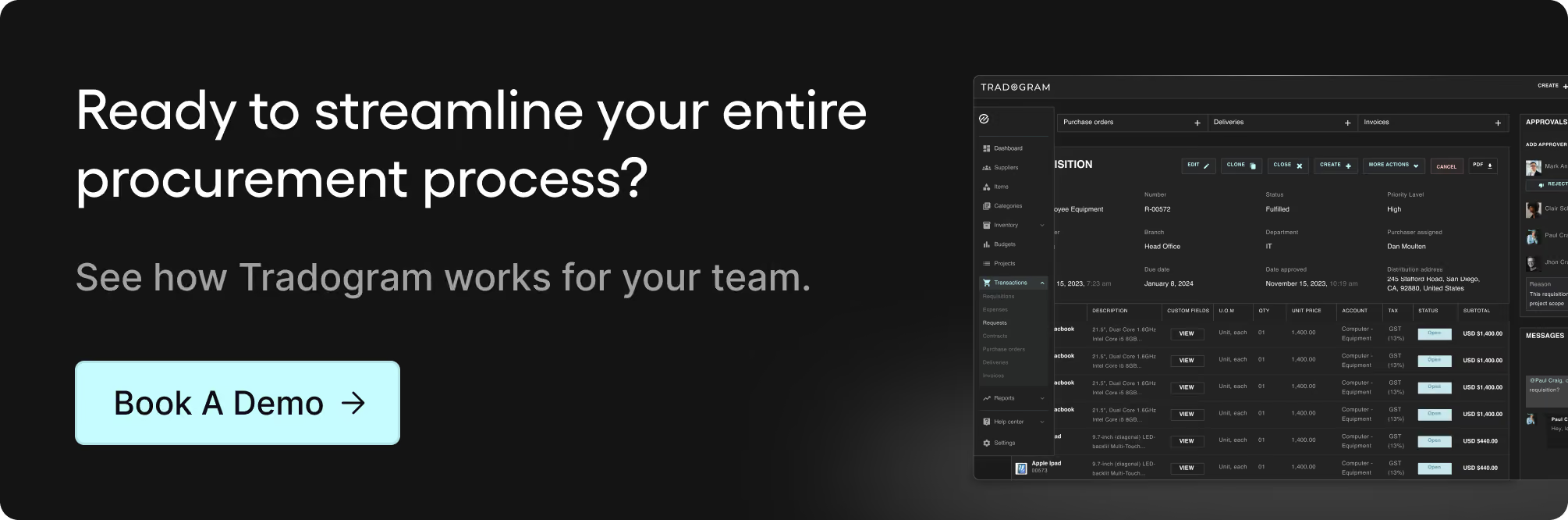
Take that list into every demo you run, including ours. If you want to see how Tradogram answers all eight, book a demo and bring your own chart of accounts and someone who has never seen the software.